Billing Belongs At The Operations Level
Billing Belongs At The Operations Level
Billing Belongs At The Operations Level
- Content
The Sequencing Problem in Billing
Logistics billing has a sequencing problem. By the time an invoice gets written, the shipment is done, the exceptions have been absorbed, and the context that would make every line item defensible. All of the emails, the approvals, the rate confirmations are scattered across inboxes, systems, and memory. Finance teams are working from an incomplete record.
The result is Days Sales Outstanding (DSO) of 100 days + , invoice rejection rates around 30 percent +, and revenue leakage between 5 and 10 percent. This is the outcome of a disconnect between billing and operational context.
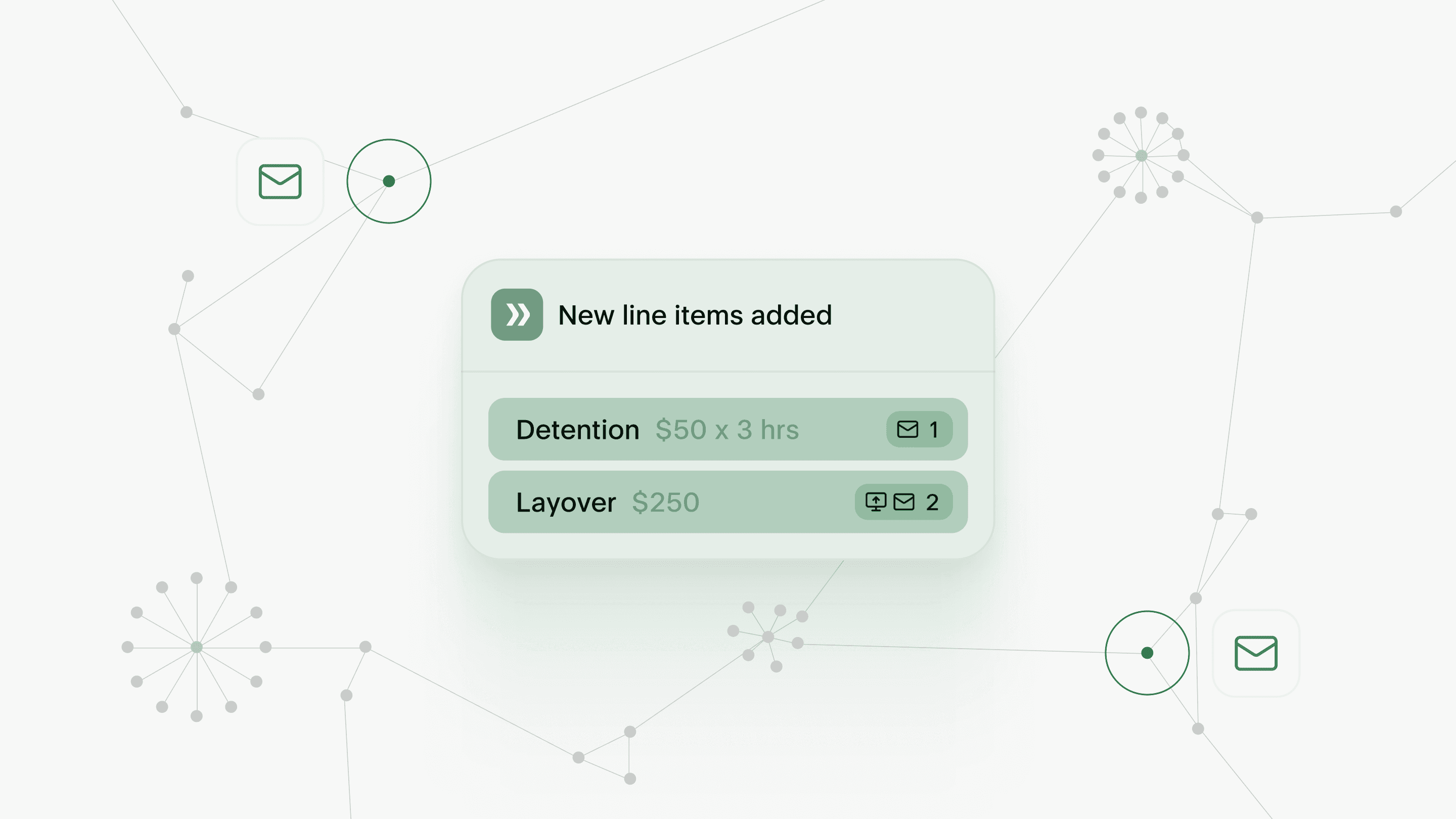
Tally was built to close that gap, bringing billing down to the operations level, where context is captured in real time and every invoice reflects exactly what happened. Here's how it works.
Building the Financial Record
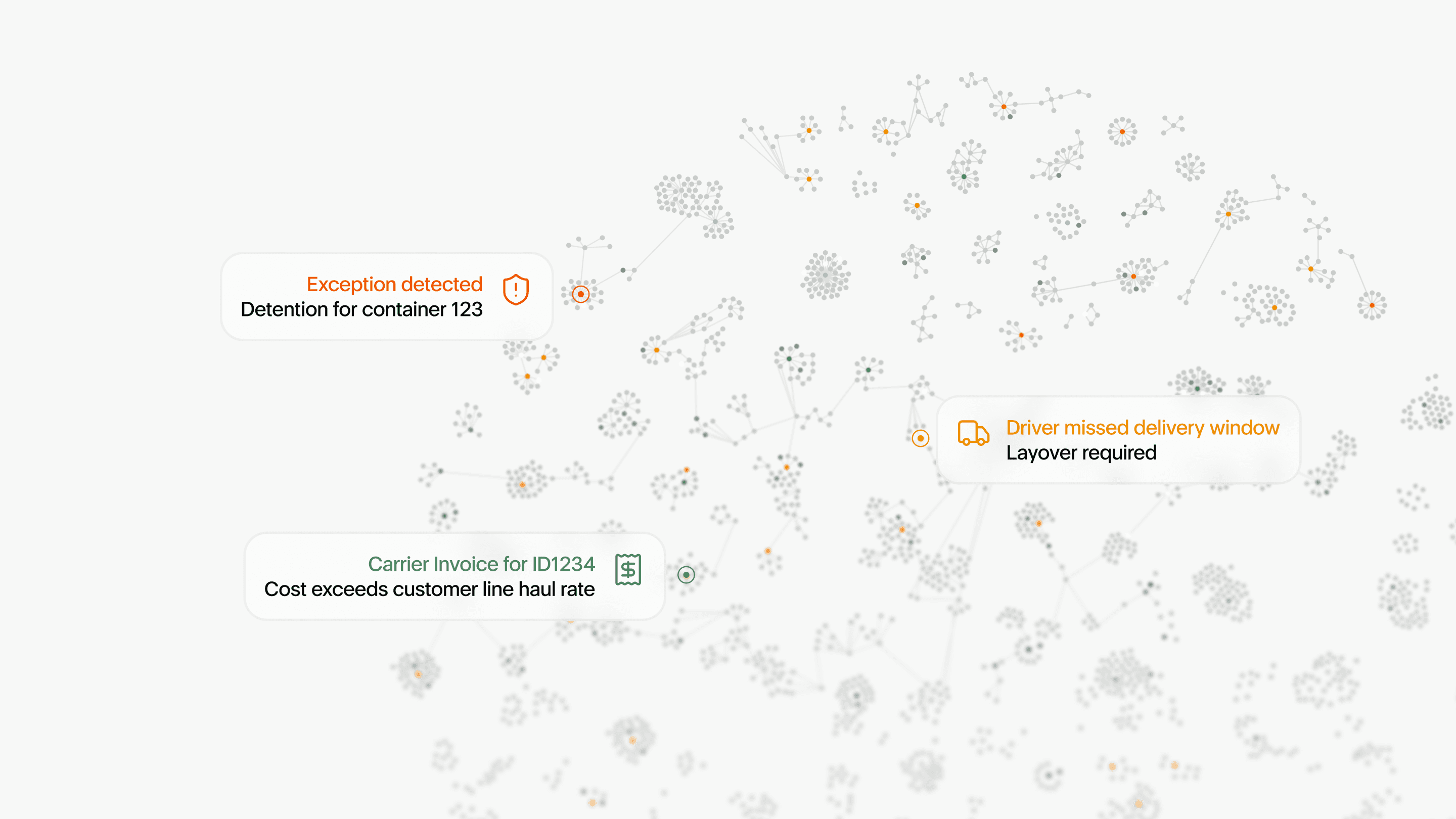
At the core of Tally is a logistics context graph. As a shipment moves, Tally ingests data from across the operation — TMS records, rate cards, contracts, SOPs, PDFs, email threads — and maps it together at the shipment level. Every billable event is identified, matched, and understood in context, automatically.
This means billing isn't waiting for someone to pull a report or chase down a document. The financial record of a shipment builds continuously as the operation unfolds. By the time a load delivers, Tally already knows what happened, what it costs, and what needs to be invoiced.
Capturing Exceptions as They Happen
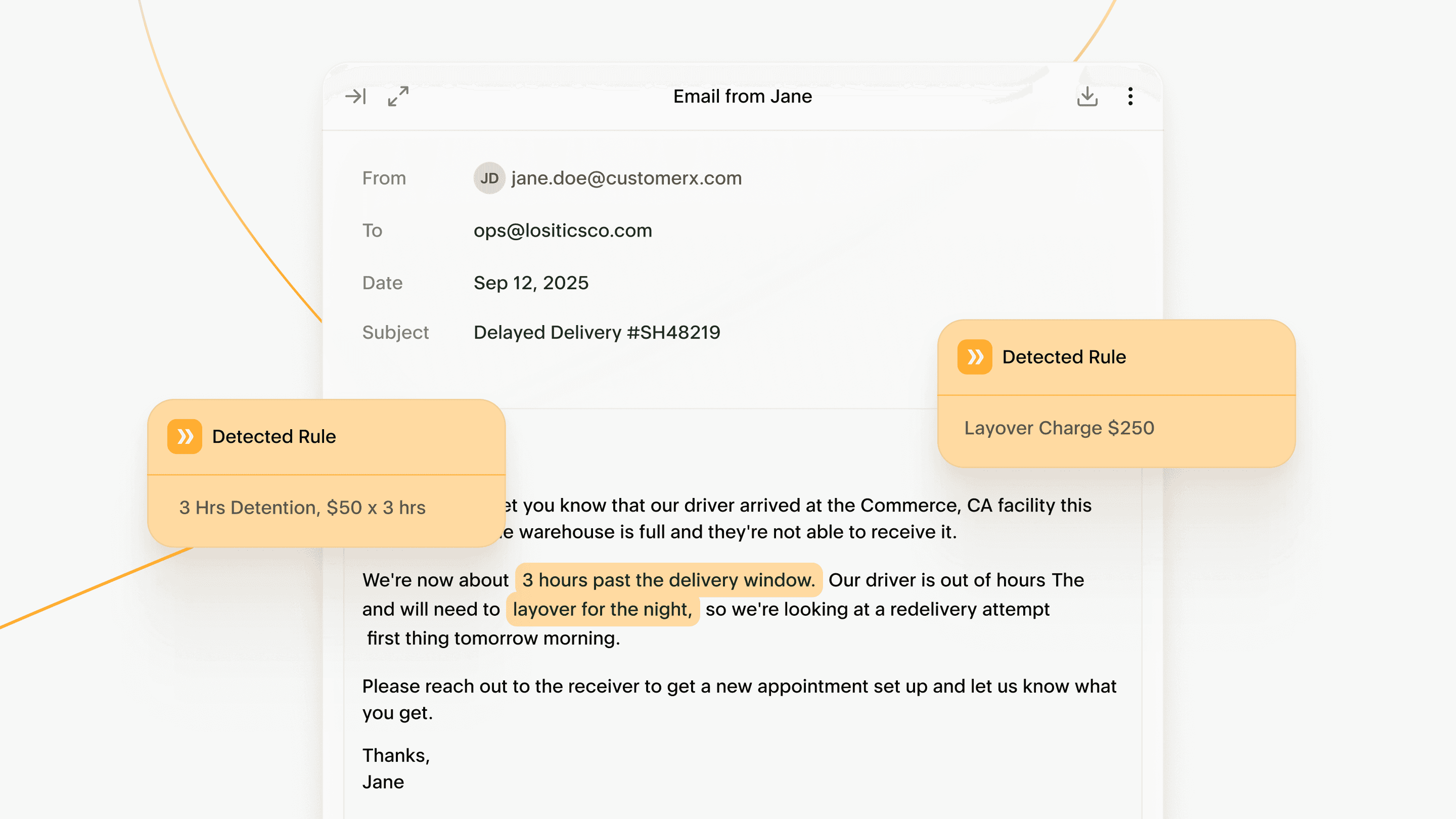
Exceptions are where logistics billing typically breaks down. A carrier flags a detention. A customer emails to approve extra storage. An accessorial gets negotiated on the fly. In a traditional billing workflow, these moments either get documented inconsistently or missed entirely and the invoice suffers for it.
Tally ingests the semantics of email communications in real time, identifying exceptions, discrepancies, and approvals as they happen and matching them to the relevant shipment. When an exception occurs, it's captured with full context, not reconstructed from memory a week later when a customer pushes back.
Invoices Backed by Context
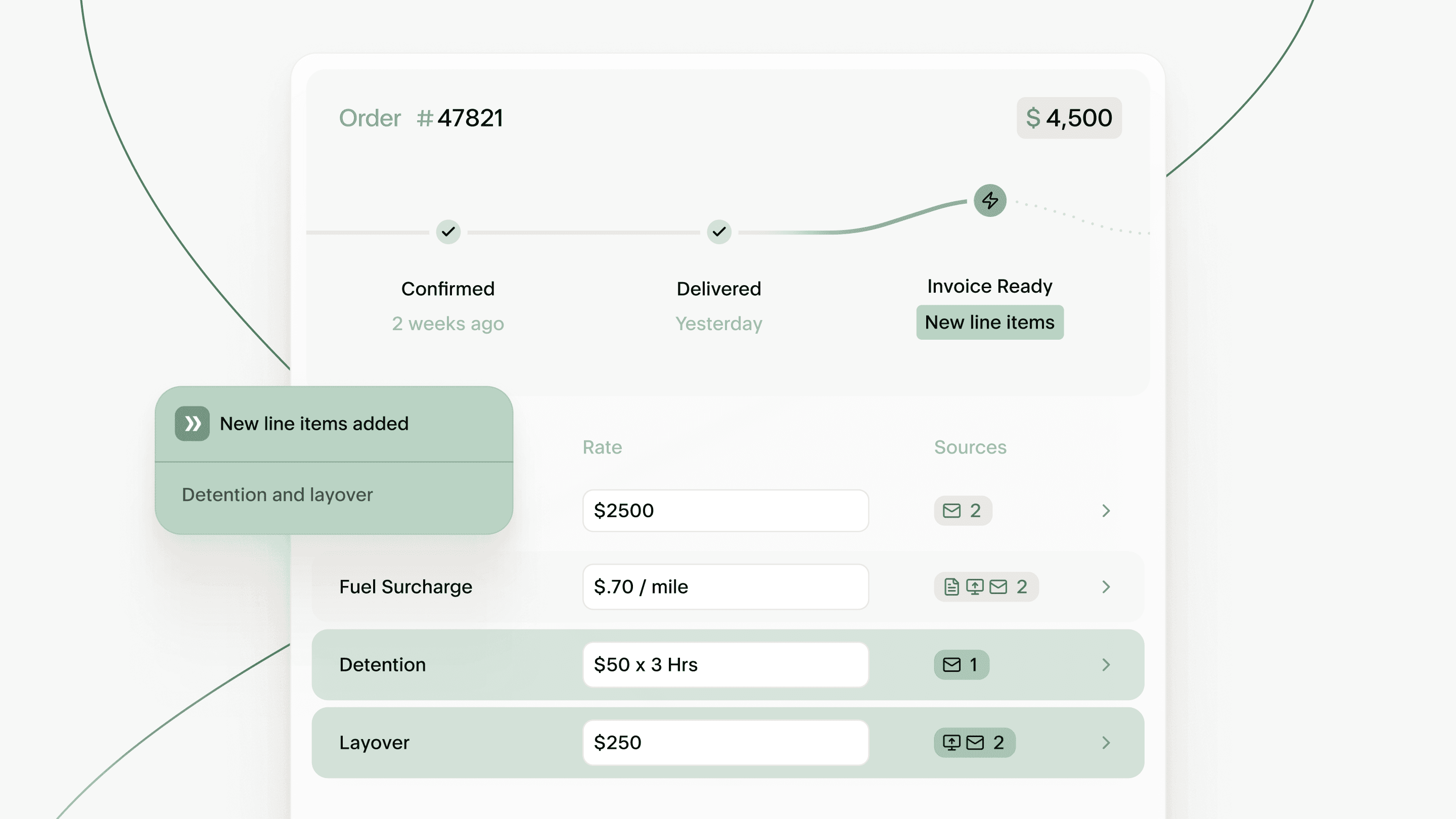
Every invoice Tally generates is built directly from the context graph. Each line item carries its supporting documentation — rate cards, signed SOPs, email approvals, PDFs — surfaced automatically and attached at the point of billing. There's no manual assembly, no hunting for backup, no hoping the customer accepts the charge without documentation.
The invoice doesn't just go out faster. It goes out complete, with the kind of paper trail that turns a dispute into a closed conversation.
Billing as an Operational Function
Logistics companies have been told for years that billing complexity is just part of the business. Tally's view is that the complexity was always manageable, the industry just lacked the tooling to handle it at the operational level, where the information is actually generated. That's the problem we built Tally to solve.
Tally is an AI-native Financial Ops and Revenue Management platform for enterprise logistics.
The Sequencing Problem in Billing
Logistics billing has a sequencing problem. By the time an invoice gets written, the shipment is done, the exceptions have been absorbed, and the context that would make every line item defensible. All of the emails, the approvals, the rate confirmations are scattered across inboxes, systems, and memory. Finance teams are working from an incomplete record.
The result is Days Sales Outstanding (DSO) of 100 days + , invoice rejection rates around 30 percent +, and revenue leakage between 5 and 10 percent. This is the outcome of a disconnect between billing and operational context.
Tally was built to close that gap, bringing billing down to the operations level, where context is captured in real time and every invoice reflects exactly what happened. Here's how it works.
Building the Financial Record
At the core of Tally is a logistics context graph. As a shipment moves, Tally ingests data from across the operation — TMS records, rate cards, contracts, SOPs, PDFs, email threads — and maps it together at the shipment level. Every billable event is identified, matched, and understood in context, automatically.
This means billing isn't waiting for someone to pull a report or chase down a document. The financial record of a shipment builds continuously as the operation unfolds. By the time a load delivers, Tally already knows what happened, what it costs, and what needs to be invoiced.
Capturing Exceptions as They Happen
Exceptions are where logistics billing typically breaks down. A carrier flags a detention. A customer emails to approve extra storage. An accessorial gets negotiated on the fly. In a traditional billing workflow, these moments either get documented inconsistently or missed entirely and the invoice suffers for it.
Tally ingests the semantics of email communications in real time, identifying exceptions, discrepancies, and approvals as they happen and matching them to the relevant shipment. When an exception occurs, it's captured with full context, not reconstructed from memory a week later when a customer pushes back.
Invoices Backed by Context
Every invoice Tally generates is built directly from the context graph. Each line item carries its supporting documentation — rate cards, signed SOPs, email approvals, PDFs — surfaced automatically and attached at the point of billing. There's no manual assembly, no hunting for backup, no hoping the customer accepts the charge without documentation.
The invoice doesn't just go out faster. It goes out complete, with the kind of paper trail that turns a dispute into a closed conversation.
Billing as an Operational Function
Logistics companies have been told for years that billing complexity is just part of the business. Tally's view is that the complexity was always manageable, the industry just lacked the tooling to handle it at the operational level, where the information is actually generated. That's the problem we built Tally to solve.
Tally is an AI-native Financial Ops and Revenue Management platform for enterprise logistics.


Book a demo
Your team should be making decisions, not drowning in emails and spreadsheets. Tally can coordinate the rest.

2026 © Copyright Tallytech, Inc.
Book a demo
Your team should be making decisions, not drowning in emails and spreadsheets. Tally can coordinate the rest.
2026 © Copyright Tallytech, Inc.
Book a demo
Your team should be making decisions, not drowning in emails and spreadsheets. Tally can coordinate the rest.
2026 © Copyright Tallytech, Inc.