Large Language Models Aren’t Enough for Finance Operations
Large Language Models Aren’t Enough for Finance Operations
Large Language Models Aren’t Enough for Finance Operations
- Content
Large Language Models Aren’t Enough for Finance Operations
AI can read your emails now. It can extract data from PDFs, summarize shipping documents, and turn messy communication threads into structured information. For logistics teams drowning in unstructured data, that's genuinely useful.
But useful isn't the same as reliable. Logistics finance depends on consistency over time. Container numbers, bookings, rate agreements, accessorial definitions, and customer commitments must reconcile cleanly across operational systems, spreadsheets, and financial records. When results vary or cannot be recreated reliably, the burden shifts back to manual reconciliation, and confidence deteriorates quickly.
Where LLMs struggle in financial workflows
Language models are designed to make judgment calls when inputs are incomplete, ambiguous, or inconsistent. That behavior is useful when speed and coverage matter more than precision. It becomes a liability when systems are expected to behave like records of truth.
When extractions change slightly from run to run, or when relationships are inferred rather than retrieved from documented agreements, outputs may appear fluent while remaining difficult to defend operationally. These are not edge cases. They are expected outcomes when systems optimized for interpretation are asked to support financial accountability.
Why early LLM deployments fell short
Early LLM deployments in logistics focused on applying language models directly to operational workflows, often with the promise of faster decisions and reduced manual work. In controlled environments, those benefits were easy to demonstrate and hard to generalize. In real workflows, many deployments struggled to sustain value once outputs intersected with billing, margin, or customer commitments.
The basis for a given answer was difficult to inspect after the fact. When teams could not reliably recreate outcomes or trace them back to stable inputs, they reverted to manual checks as a form of risk control. The expected efficiency gains never materialized.
Similarity is not precision
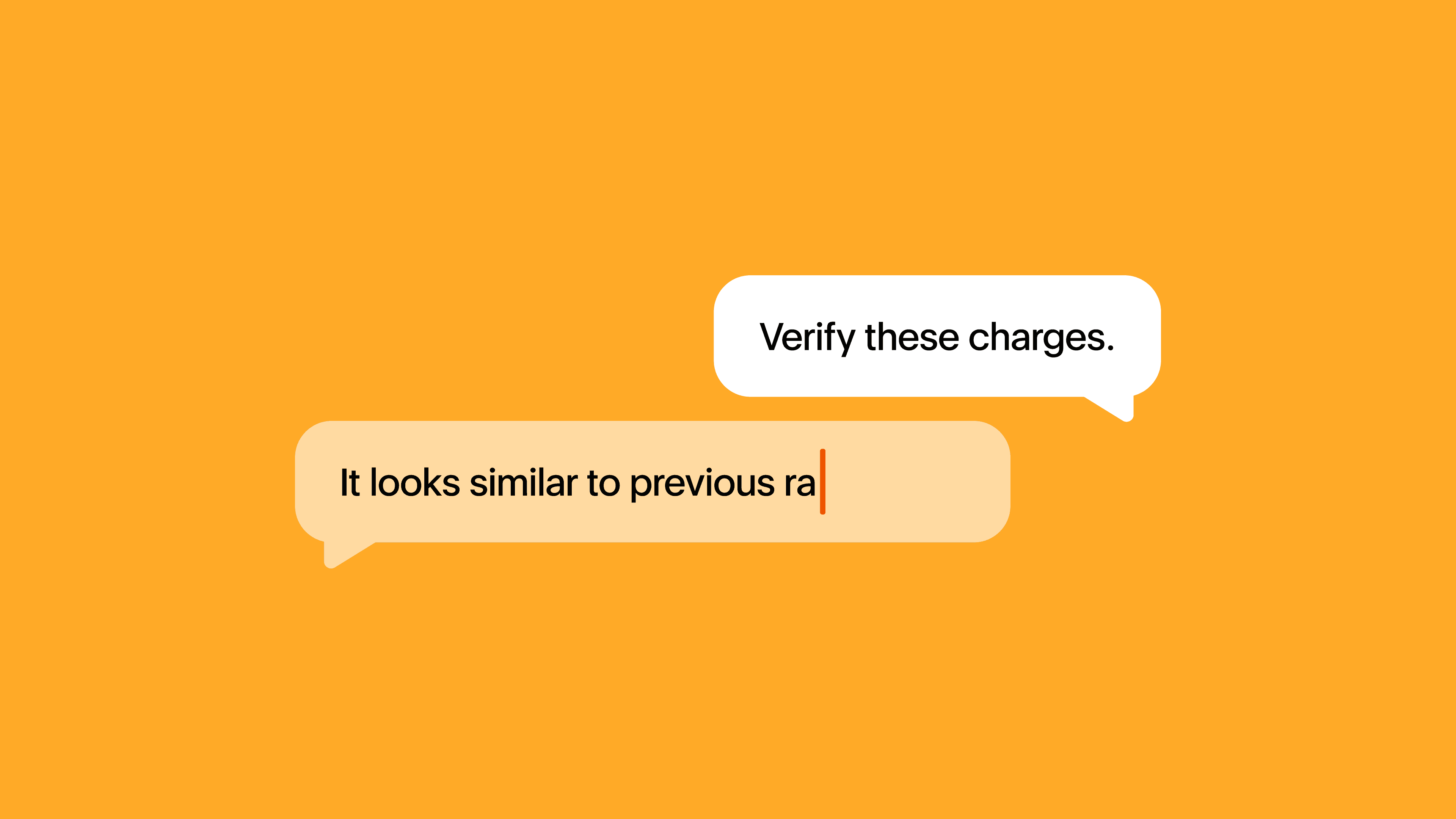
Many AI systems used to process documents and emails are designed to work by similarity. They are effective at finding information that looks or sounds close to what you are asking for, even when inputs are messy or incomplete. That makes them useful for search, review, and early-stage analysis.
Logistics workflows, however, depend on precision. Charges may share a name while applying under different conditions. Reference numbers may differ by a single character while pointing to different movements. Documents may describe related activity without describing the same event.
When systems optimized for similarity are used in billing and reconciliation, those distinctions can be lost. Results look reasonable, but “almost right” is not sufficient when teams need to explain why a charge applies, defend an invoice, or resolve a dispute. Small differences become material once financial accountability enters the picture.
The architectural requirement
Taken together, these limitations point to a structural issue rather than a tooling one.
Extracting information from emails and documents is only the first step. Companies getting real value from AI aren't just throwing language models at the problem. They're combining them with a more fundamental system that explicitly records how things and context connect.
Think of it as the difference between asking someone to remember a story versus writing it down. Language models are great at understanding the story. But if you need to prove what happened six months later, if margins shift or customers dispute charges, you need a written record you can point to.
That record needs to capture not just the facts, but the relationships: which shipment tied to which booking, which document supported which charge, which agreement justified which rate. When systems can trace those connections explicitly, disputes become investigations you can actually resolve instead of mysteries you have to reconstruct.
Tally’s graph-based foundation
At enterprise scale, the challenge is rarely a lack of data. It is the absence of a shared, inspectable view of how data connects once systems disagree.
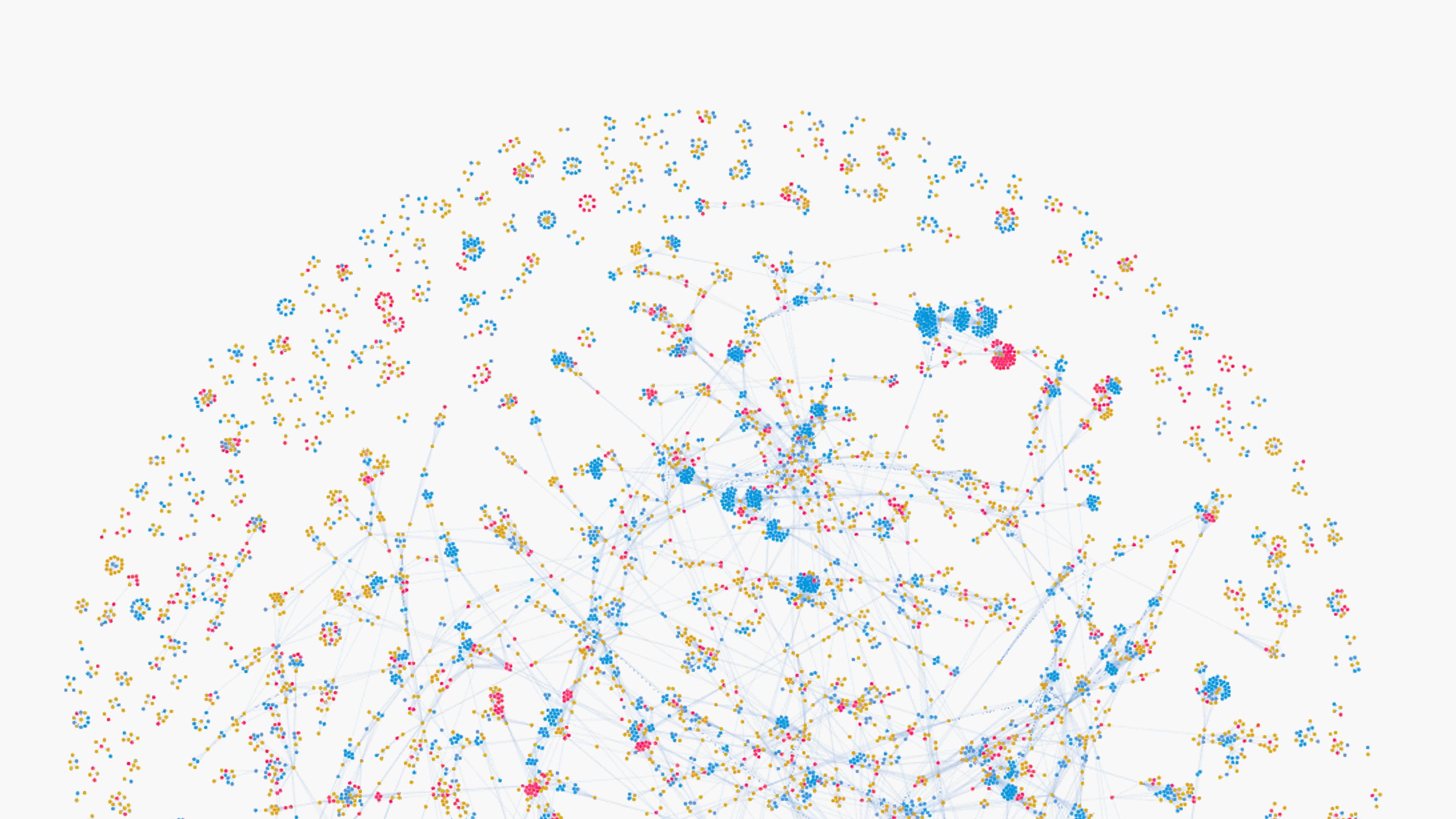
A logistics-specific graph provides that view by recording relationships explicitly rather than reconstructing them after the fact. Shipments, documents, reference numbers, charges, and parties are treated as distinct entities, along with the links that explain how they relate. When margins shift or customers dispute charges, teams can follow those links back through the exact documents, systems, and agreements that produced the outcome.
This changes how problems are resolved. Disputes become traceable rather than investigative. Variance analysis moves from reconciliation to inspection. Confidence improves because the system can explain not only what happened, but why.
Language models still play an important role. They read emails, extract details from documents, and surface relevant context. The graph gives those outputs a durable place to live. It preserves how information is interpreted, applied, and reused across operational and financial workflows. As complexity grows, decisions remain consistent rather than drifting over time.
Tally is built on this foundation. Language models assist with ingestion and classification, while the graph serves as the system of record for how operational facts, financial rules, and customer agreements connect.
For enterprises bringing AI into logistics finance, the relevant question is rarely whether the technology works in isolation. It is whether the system can maintain consistency, explainability, and trust as the organization scales. Architectures that record relationships explicitly tend to support that goal more reliably than architectures that infer them anew each time.
Large Language Models Aren’t Enough for Finance Operations
AI can read your emails now. It can extract data from PDFs, summarize shipping documents, and turn messy communication threads into structured information. For logistics teams drowning in unstructured data, that's genuinely useful.
But useful isn't the same as reliable. Logistics finance depends on consistency over time. Container numbers, bookings, rate agreements, accessorial definitions, and customer commitments must reconcile cleanly across operational systems, spreadsheets, and financial records. When results vary or cannot be recreated reliably, the burden shifts back to manual reconciliation, and confidence deteriorates quickly.
Where LLMs struggle in financial workflows
Language models are designed to make judgment calls when inputs are incomplete, ambiguous, or inconsistent. That behavior is useful when speed and coverage matter more than precision. It becomes a liability when systems are expected to behave like records of truth.
When extractions change slightly from run to run, or when relationships are inferred rather than retrieved from documented agreements, outputs may appear fluent while remaining difficult to defend operationally. These are not edge cases. They are expected outcomes when systems optimized for interpretation are asked to support financial accountability.
Why early LLM deployments fell short
Early LLM deployments in logistics focused on applying language models directly to operational workflows, often with the promise of faster decisions and reduced manual work. In controlled environments, those benefits were easy to demonstrate and hard to generalize. In real workflows, many deployments struggled to sustain value once outputs intersected with billing, margin, or customer commitments.
The basis for a given answer was difficult to inspect after the fact. When teams could not reliably recreate outcomes or trace them back to stable inputs, they reverted to manual checks as a form of risk control. The expected efficiency gains never materialized.
Similarity is not precision
Many AI systems used to process documents and emails are designed to work by similarity. They are effective at finding information that looks or sounds close to what you are asking for, even when inputs are messy or incomplete. That makes them useful for search, review, and early-stage analysis.
Logistics workflows, however, depend on precision. Charges may share a name while applying under different conditions. Reference numbers may differ by a single character while pointing to different movements. Documents may describe related activity without describing the same event.
When systems optimized for similarity are used in billing and reconciliation, those distinctions can be lost. Results look reasonable, but “almost right” is not sufficient when teams need to explain why a charge applies, defend an invoice, or resolve a dispute. Small differences become material once financial accountability enters the picture.
The architectural requirement
Taken together, these limitations point to a structural issue rather than a tooling one.
Extracting information from emails and documents is only the first step. Companies getting real value from AI aren't just throwing language models at the problem. They're combining them with a more fundamental system that explicitly records how things and context connect.
Think of it as the difference between asking someone to remember a story versus writing it down. Language models are great at understanding the story. But if you need to prove what happened six months later, if margins shift or customers dispute charges, you need a written record you can point to.
That record needs to capture not just the facts, but the relationships: which shipment tied to which booking, which document supported which charge, which agreement justified which rate. When systems can trace those connections explicitly, disputes become investigations you can actually resolve instead of mysteries you have to reconstruct.
Tally’s graph-based foundation
At enterprise scale, the challenge is rarely a lack of data. It is the absence of a shared, inspectable view of how data connects once systems disagree.
A logistics-specific graph provides that view by recording relationships explicitly rather than reconstructing them after the fact. Shipments, documents, reference numbers, charges, and parties are treated as distinct entities, along with the links that explain how they relate. When margins shift or customers dispute charges, teams can follow those links back through the exact documents, systems, and agreements that produced the outcome.
This changes how problems are resolved. Disputes become traceable rather than investigative. Variance analysis moves from reconciliation to inspection. Confidence improves because the system can explain not only what happened, but why.
Language models still play an important role. They read emails, extract details from documents, and surface relevant context. The graph gives those outputs a durable place to live. It preserves how information is interpreted, applied, and reused across operational and financial workflows. As complexity grows, decisions remain consistent rather than drifting over time.
Tally is built on this foundation. Language models assist with ingestion and classification, while the graph serves as the system of record for how operational facts, financial rules, and customer agreements connect.
For enterprises bringing AI into logistics finance, the relevant question is rarely whether the technology works in isolation. It is whether the system can maintain consistency, explainability, and trust as the organization scales. Architectures that record relationships explicitly tend to support that goal more reliably than architectures that infer them anew each time.
Book a demo
Your team should be making decisions, not drowning in emails and spreadsheets. Tally can coordinate the rest.

2026 © Copyright Tallytech, Inc.
Book a demo
Your team should be making decisions, not drowning in emails and spreadsheets. Tally can coordinate the rest.
2026 © Copyright Tallytech, Inc.
Book a demo
Your team should be making decisions, not drowning in emails and spreadsheets. Tally can coordinate the rest.
2026 © Copyright Tallytech, Inc.