AI's 'undo' button doesn't reach the physical world
AI's 'undo' button doesn't reach the physical world
AI's 'undo' button doesn't reach the physical world

Justin Young
CEO & Co-Founder

- Content
When I think about why AI has landed so easily in some kinds of work and not others, I keep coming back to the undo button.
In knowledge work, being wrong is cheap. If a model writes a weak paragraph or a clumsy function, you edit it, or you just run it again. The whole way we work assumes you can iterate toward something good, and the worst case is wasted time. That's part of why AI has felt so natural for legal, finance, consulting, and software.
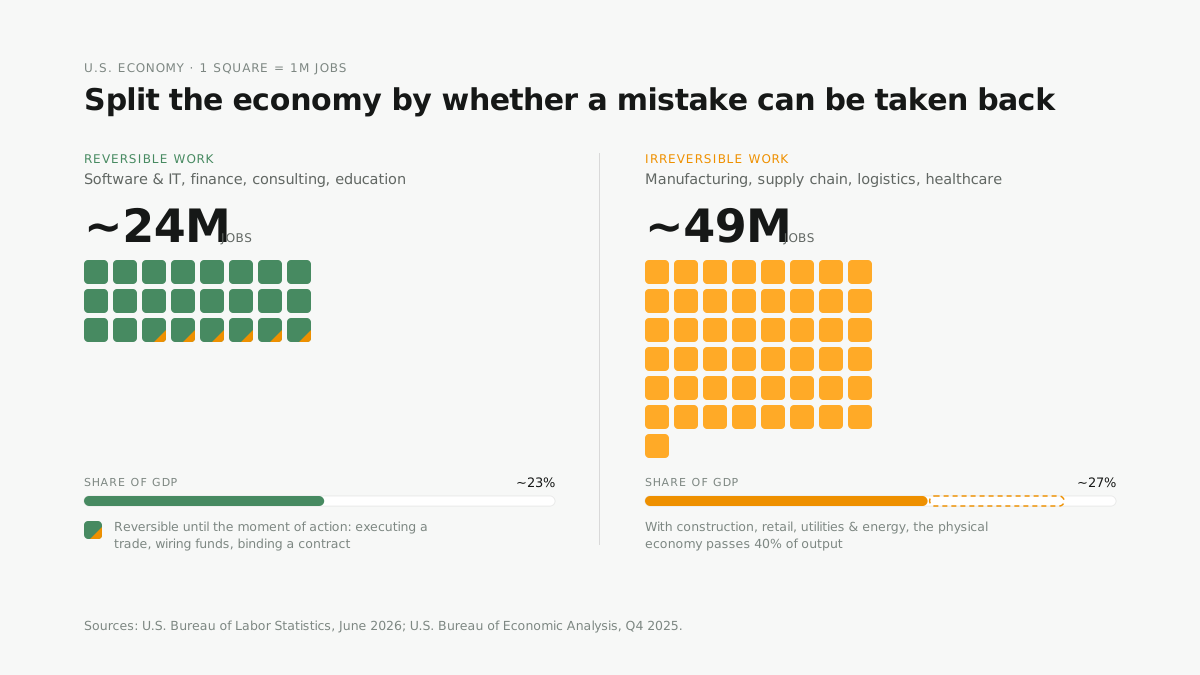
A lot of the enterprise doesn't work that way. When you procure a part, sign a contract, ship a container, or pay a vendor, the decision leaves the building. It costs real money, it affects other people, and you can't take it back by opening a new chat. And this isn't a small corner of the economy. If you sort industries by whether a mistake can be reversed, the irreversible side, manufacturing, supply chain, logistics, healthcare, is actually the bigger one. By BLS and BEA numbers, it is well over a third of GDP once you include everything that makes and moves physical goods.
I don't think the answer is to wait for models smart enough that we can just hand them these decisions. The models will keep getting better, and betting against that seems like a mistake. But I've come to believe capability was never the problem here. The problem is control. A smarter model making one big, opaque call can still get an expensive thing wrong, and in this world you don't get a second try.
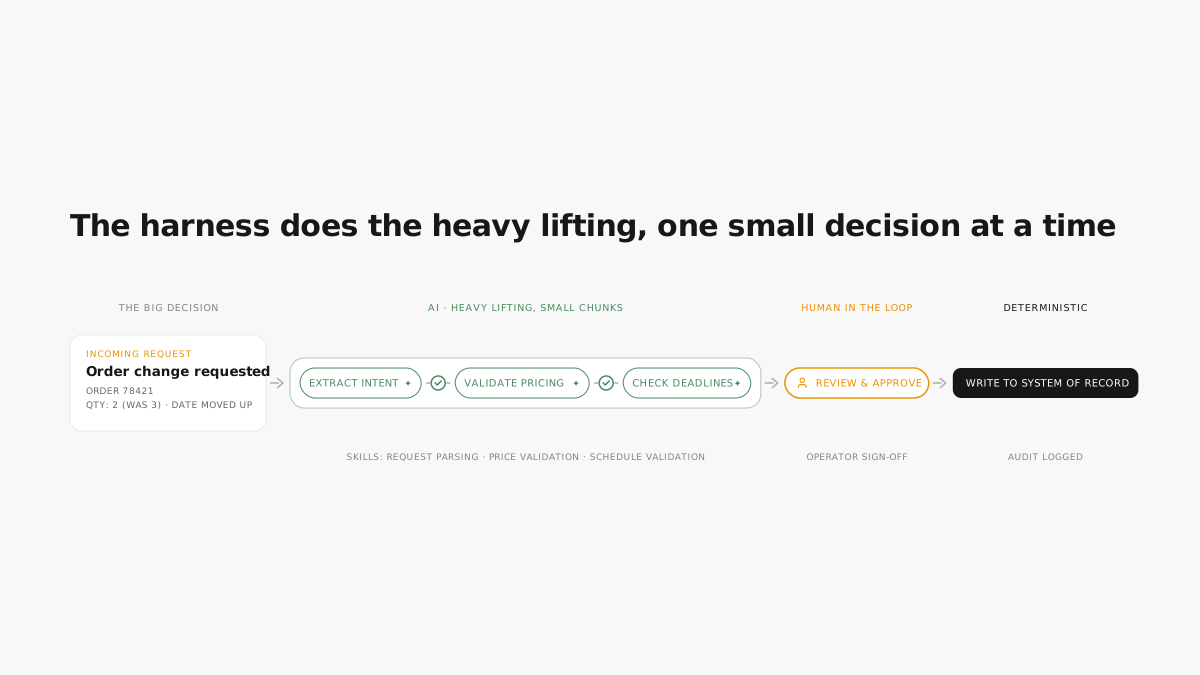
What's worked for us is treating this as an architecture question instead of a model question. You take a decision that can't be undone and break it into smaller steps. The AI does the reasoning inside each step, but the system around it stays predictable: one source of truth for the data, each step checked against real rules, every change recorded, and nothing irreversible happening until it has cleared those checks. That gives you room to catch and fix things before anything is committed, which is about as close to an undo button as this work gets.
That's the idea behind what we're building at Tally, starting in supply chain and logistics, where these irreversible, multi-party decisions are everywhere. What I find interesting is that the model is the piece everyone can rent. The harness around it, the data, the checks, the expertise built into each step, is the part that's actually hard, and it gets more useful as the models improve, not less. We don't want to keep people out of the loop, we want to let an expert direct the work instead of doing it by hand, and to make each decision something they can stand behind.
The physical economy is going to run on AI one way or another. I just think the version that wins is the one you can actually control.
When I think about why AI has landed so easily in some kinds of work and not others, I keep coming back to the undo button.
In knowledge work, being wrong is cheap. If a model writes a weak paragraph or a clumsy function, you edit it, or you just run it again. The whole way we work assumes you can iterate toward something good, and the worst case is wasted time. That's part of why AI has felt so natural for legal, finance, consulting, and software.
A lot of the enterprise doesn't work that way. When you procure a part, sign a contract, ship a container, or pay a vendor, the decision leaves the building. It costs real money, it affects other people, and you can't take it back by opening a new chat. And this isn't a small corner of the economy. If you sort industries by whether a mistake can be reversed, the irreversible side, manufacturing, supply chain, logistics, healthcare, is actually the bigger one. By BLS and BEA numbers, it is well over a third of GDP once you include everything that makes and moves physical goods.
I don't think the answer is to wait for models smart enough that we can just hand them these decisions. The models will keep getting better, and betting against that seems like a mistake. But I've come to believe capability was never the problem here. The problem is control. A smarter model making one big, opaque call can still get an expensive thing wrong, and in this world you don't get a second try.
What's worked for us is treating this as an architecture question instead of a model question. You take a decision that can't be undone and break it into smaller steps. The AI does the reasoning inside each step, but the system around it stays predictable: one source of truth for the data, each step checked against real rules, every change recorded, and nothing irreversible happening until it has cleared those checks. That gives you room to catch and fix things before anything is committed, which is about as close to an undo button as this work gets.
That's the idea behind what we're building at Tally, starting in supply chain and logistics, where these irreversible, multi-party decisions are everywhere. What I find interesting is that the model is the piece everyone can rent. The harness around it, the data, the checks, the expertise built into each step, is the part that's actually hard, and it gets more useful as the models improve, not less. We don't want to keep people out of the loop, we want to let an expert direct the work instead of doing it by hand, and to make each decision something they can stand behind.
The physical economy is going to run on AI one way or another. I just think the version that wins is the one you can actually control.
Related Articles
Book a demo
Your team should be making decisions, not drowning in emails and spreadsheets. Tally can coordinate the rest.

2026 © Copyright Tallytech, Inc.
Book a demo
Your team should be making decisions, not drowning in emails and spreadsheets. Tally can coordinate the rest.
2026 © Copyright Tallytech, Inc.
Book a demo
Your team should be making decisions, not drowning in emails and spreadsheets. Tally can coordinate the rest.
2026 © Copyright Tallytech, Inc.